
What Is Automated SEO And How It Creates A Repeatable SEO Workflow
Learn what is automated seo, how workflows automate SEO tasks, and how teams use automation while keeping strategy and expertise involved.
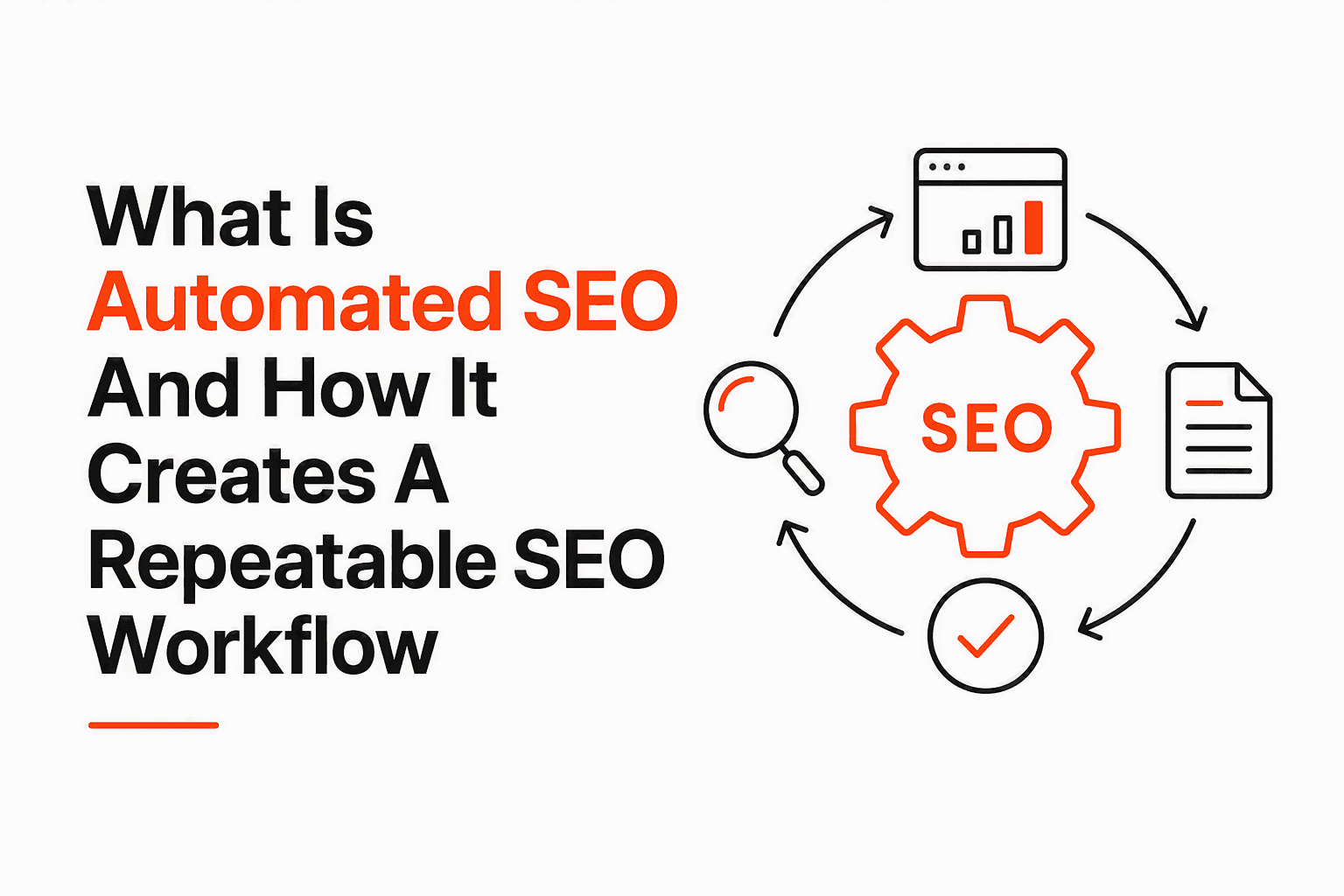
what is automated seo refers to using software, artificial intelligence, and repeatable workflows to handle routine SEO tasks while human experts continue making strategic decisions. Automated SEO helps teams reduce manual work across research, content production, optimization checks, publishing, and reporting. Instead of replacing SEO professionals, automation creates systems that make consistent execution easier.
- Automated SEO turns repetitive SEO activities into structured workflows with clear inputs, checks, and outputs.
- The best automation systems support human strategy by handling research, content operations, and reporting tasks.
- Successful SEO automation combines AI workflows, templates, quality reviews, and performance analysis.
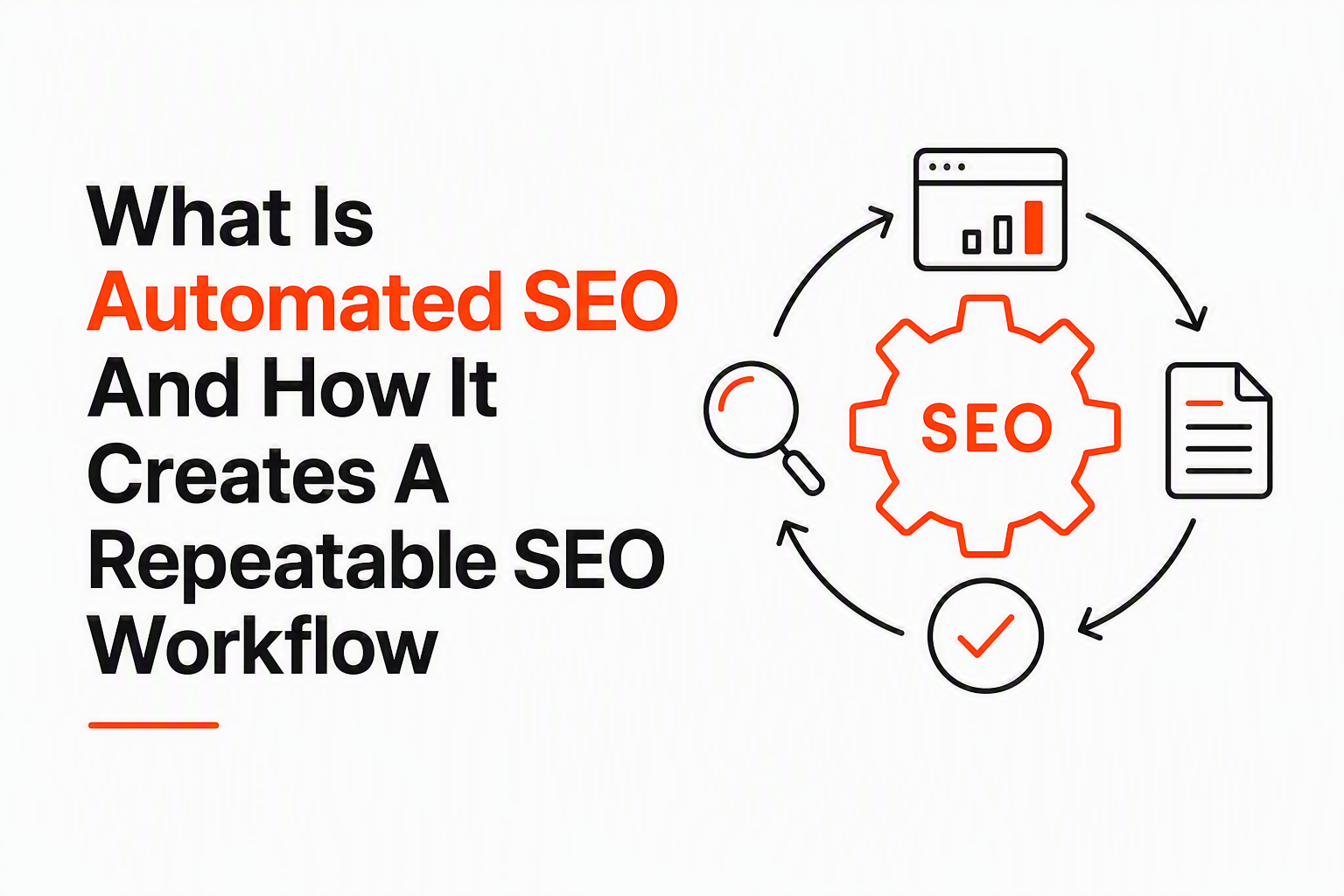
What Is Automated SEO And Why Does It Matter
Automated SEO is a system for using technology to complete repeatable search optimization tasks without requiring manual action at every step. The purpose of what is automated seo is not to remove expertise from SEO, but to help teams spend more time on strategy, analysis, and creative decisions.
Many SEO teams face the same operational problem: important tasks are repeated across dozens or hundreds of pages. Keyword collection, content briefs, metadata checks, internal linking reviews, and reporting all require attention, but manual execution can slow growth. Automation creates a process where each task follows defined rules instead of depending on memory or individual habits.
Automation solves the repeatability problem
A practical automated SEO system usually has four components: an input, a workflow rule, a quality checkpoint, and an output. For example, a team may provide target keywords, use a workflow to generate a content outline, review the draft against SEO requirements, and publish the approved article.
In our experience working with SEO teams, the biggest improvement comes from removing inconsistent handoffs between research, writing, editing, and publishing. Automation works best when the strategy is already clear and the workflow simply makes execution more reliable.
Human decisions remain essential
Automation can identify patterns, organize information, and accelerate production, but it does not replace decisions about audience needs, brand positioning, or business goals. A useful framework is to automate tasks with clear rules while keeping judgment-heavy decisions with people.
Good candidates for automation include:
- Collecting keyword data and organizing topic lists.
- Generating first drafts from approved outlines.
- Checking technical SEO requirements.
- Creating recurring performance reports.
How Automated SEO Works Across The Content Workflow
Automated SEO supports the full content workflow by connecting research, planning, production, optimization, publishing, and measurement into a repeatable sequence. A complete workflow makes each stage easier to track and improve.
Step 1: Research and planning automation
The first stage uses automation to organize opportunities. SEO teams can collect keywords, group topics by search intent, and create content priorities based on defined criteria. Instead of starting every project from a blank document, teams begin with structured information.
A useful research checklist includes:
- Target keyword and related search terms.
- Audience problem or search intent.
- Required content format.
- Internal pages that should receive links.
Step 2: Content creation and optimization
Content automation helps teams move from approved strategy to production. Modern AI workflows can generate outlines, drafts, metadata suggestions, and optimization recommendations. However, editors still need to verify accuracy, usefulness, and brand alignment.
Teams exploring what is seo automation often focus on this stage because content production creates the largest volume of repetitive work. A strong workflow defines quality requirements before generation begins.
Step 3: Publishing and measurement
Automation can also connect approved content to publishing systems and reporting dashboards. For agencies managing multiple websites, this reduces copy-pasting and creates a consistent delivery process.
When we tested structured publishing workflows, our team found that the most valuable improvement was not faster writing alone. The clearer process made it easier to identify where quality checks were needed before content reached clients.
The Benefits And Limits Of Automating SEO Tasks
Automating SEO tasks improves efficiency, consistency, and scalability, but automation works only when teams understand which activities should and should not be automated.
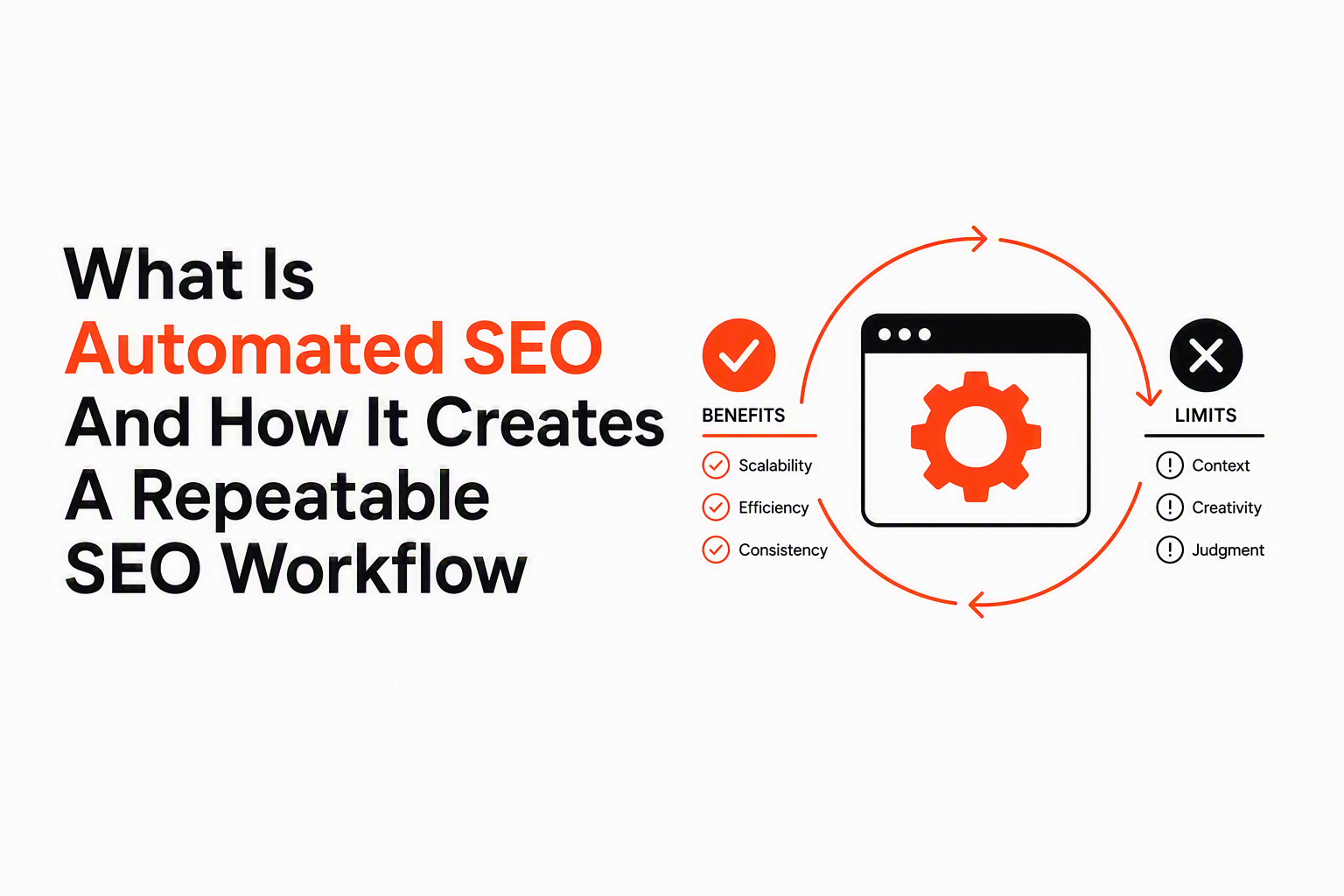
Benefits of SEO automation
The main benefit of automation is operational efficiency. Teams can create repeatable systems for work that previously required many manual steps. This is especially valuable for agencies handling multiple client websites.
- Consistency: Templates and rules help teams apply the same standards across content projects.
- Speed: Automated workflows reduce time spent on repetitive preparation tasks.
- Scalability: Teams can increase publishing volume without increasing every manual step.
- Visibility: Automated reporting makes performance information easier to review.
In our experience working with content operations, automation delivers the most value when teams measure workflow improvements instead of only counting published articles. Faster production matters only when quality standards remain stable.
Limits and common mistakes
Automation is not a shortcut around SEO fundamentals. Poor inputs create poor outputs, and automated content still needs review. Common mistakes include publishing without fact checks, ignoring audience intent, and relying on generic templates for every topic.
A simple evaluation framework asks three questions:
- Does the task happen frequently enough to justify automation?
- Can success be measured with clear criteria?
- Does automation preserve quality instead of reducing it?
Teams should also understand that AI-generated content requires oversight. Search engines evaluate usefulness, relevance, and experience signals, so automation should support better workflows rather than encourage low-quality publishing.
Build A Practical Automated SEO Workflow For Your Team
A practical automated SEO workflow starts with choosing repeatable tasks, defining quality rules, and creating checkpoints for human review. The goal is a system that combines efficiency with expert control.
Step 1: Map your current SEO process
Begin by documenting every stage from keyword discovery to reporting. Mark tasks as manual, partially automated, or ready for full automation. This creates a realistic starting point instead of automating randomly.
Step 2: Create workflow templates
Templates help teams standardize inputs and outputs. A useful template should include the target audience, keyword focus, brand requirements, content structure, review checklist, and publishing requirements.
AI workflow templates can help agencies organize repeatable processes without replacing existing SEO strategy. For example, Better SERP supports agency workflows by turning keywords and brand guidelines into publish-ready content processes with SEO checks and publishing connections.
Step 3: Add review checkpoints
Every automated workflow should define where humans review the output. Typical checkpoints include:
- Strategy approval before content creation.
- Editorial review before publishing.
- Performance review after publication.
Step 4: Improve using performance data
SEO automation becomes stronger over time when teams use results to refine workflows. Review rankings, engagement, conversions, and content quality signals to improve future processes.
Teams using ai for seo and seo ai workflows should treat automation as an evolving system. The strongest workflows improve through testing, measurement, and adjustment.
| SEO Task | Automation Opportunity | Human Role |
|---|---|---|
| Keyword research | Organize topics and identify patterns | Select strategic priorities |
| Content creation | Generate drafts and structures | Review accuracy and usefulness |
| Publishing | Schedule and distribute approved content | Confirm final quality |
| Reporting | Collect recurring performance data | Interpret business impact |
Frequently Asked Questions About Automated SEO
What is automated SEO used for?
Automated SEO is used for repetitive tasks such as keyword organization, content workflows, optimization checks, publishing processes, and reporting. It helps teams create consistent systems while keeping strategic decisions with SEO professionals.
Can automated SEO replace SEO specialists?
No. Automation supports SEO specialists by reducing repetitive work. Human expertise is still needed for strategy, audience understanding, quality control, and business decisions.
What tasks should businesses automate first?
Businesses should start with frequent tasks that have clear rules, such as reporting, content templates, metadata checks, and workflow management.
How does AI relate to SEO automation?
AI can improve SEO automation by helping with content creation, analysis, and workflow assistance. A successful process combines AI capabilities with human review and clear standards.
Building a repeatable SEO workflow does not require removing human expertise from the process. Better SERP helps agencies organize AI workflow templates, automate content production steps, and create scalable systems that support existing SEO strategies. Explore Better SERP to start building a more consistent SEO production workflow.
Read Next
View all
How To Optimize Your Content For SEO, A Simple Workflow For Beginners
Learn how to optimize your content for seo with a simple page-by-page workflow: intent, titles, subtopics, links, free tools, and measurement.

What Is SEO Automation, How It Works, And 3 Workflows You Can Copy
Learn what is seo automation, how it works (inputs → logic → outputs), what to automate safely, and 3 copyable workflows with a starter stack.

Write SEO Friendly Article Steps Plus a Full Sample You Can Copy
Learn how to write seo friendly article content with a simple workflow, an annotated sample, and a checklist for title, meta, links, and FAQs.